





Campus Security: Protecting Knowledge and Innovation
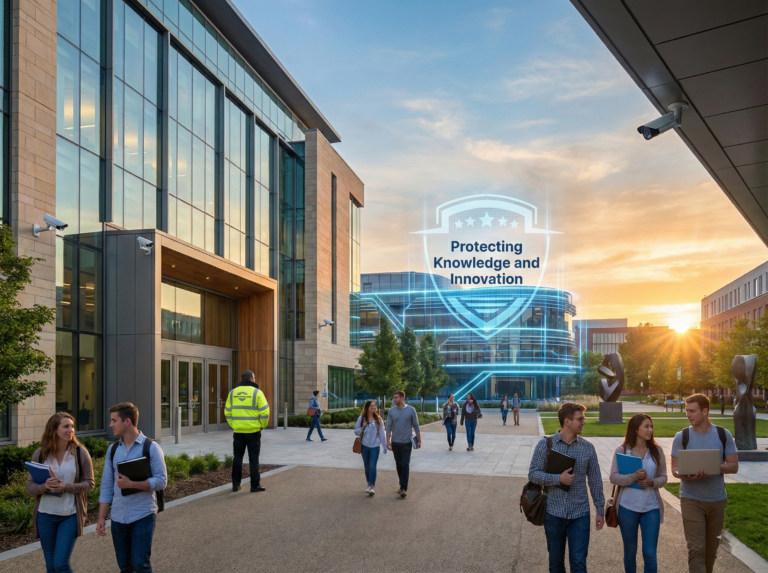
Higher education institutions are unique environments that function like small cities. With thousands of students, staff, and visitors moving through libraries, labs, and open spaces daily, the security challenge is immense. Protecting these institutions requires a strategy that is both highly effective and minimally intrusive to the academic mission.
The Complexity of Campus Environments
Unlike a single office building, a university campus is spread across multiple locations. It contains high-value research equipment, sensitive intellectual property, and extensive public-facing areas. Security must be adaptable enough to handle everything from a quiet library environment to a high-capacity graduation ceremony.
Strategic Security for Higher Education:
Campus-Wide Surveillance:
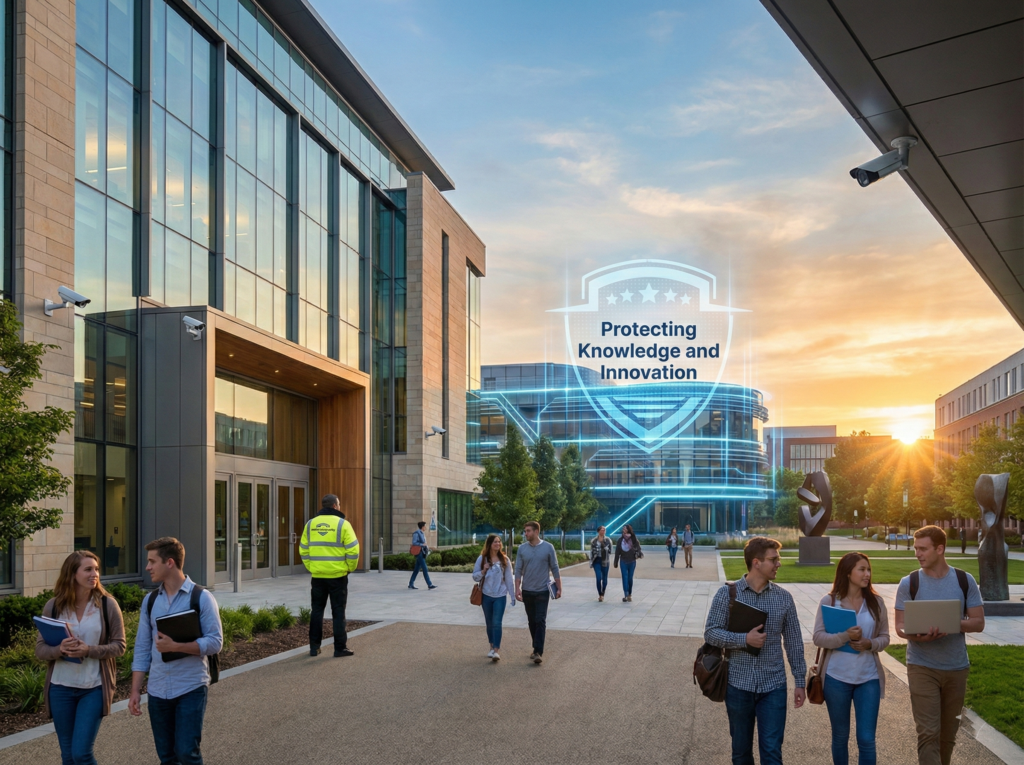
Utilizing advanced, integrated CCTV systems that cover expansive outdoor areas and high-traffic indoor corridors, allowing for real-time monitoring and rapid incident identification.
Research & Lab Protection:
Specialized access control for sensitive areas where hazardous materials or expensive research tools are stored, ensuring only authorized personnel can enter.
Emergency Response Planning:
Utilizing advanced, integrated CCTV systems that cover expansive outdoor areas and high-traffic indoor corridors, allowing for real-time monitoring and rapid incident identification.
Visible Campus Patrols:
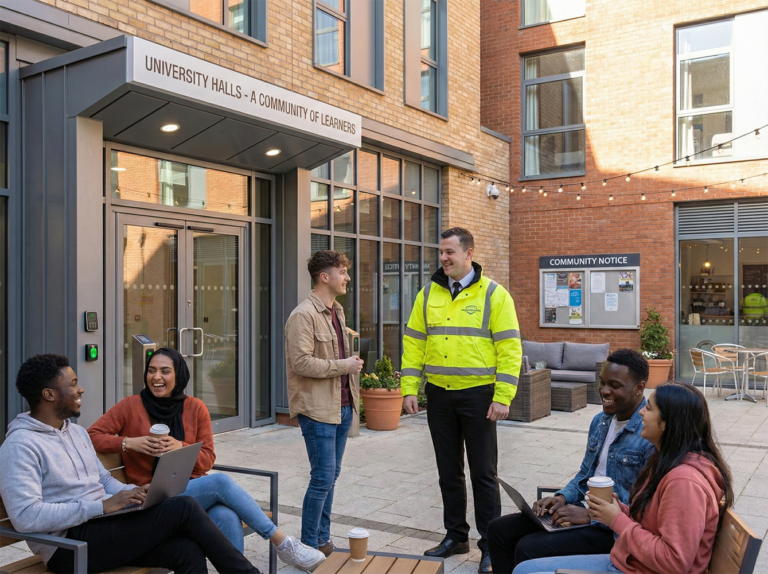
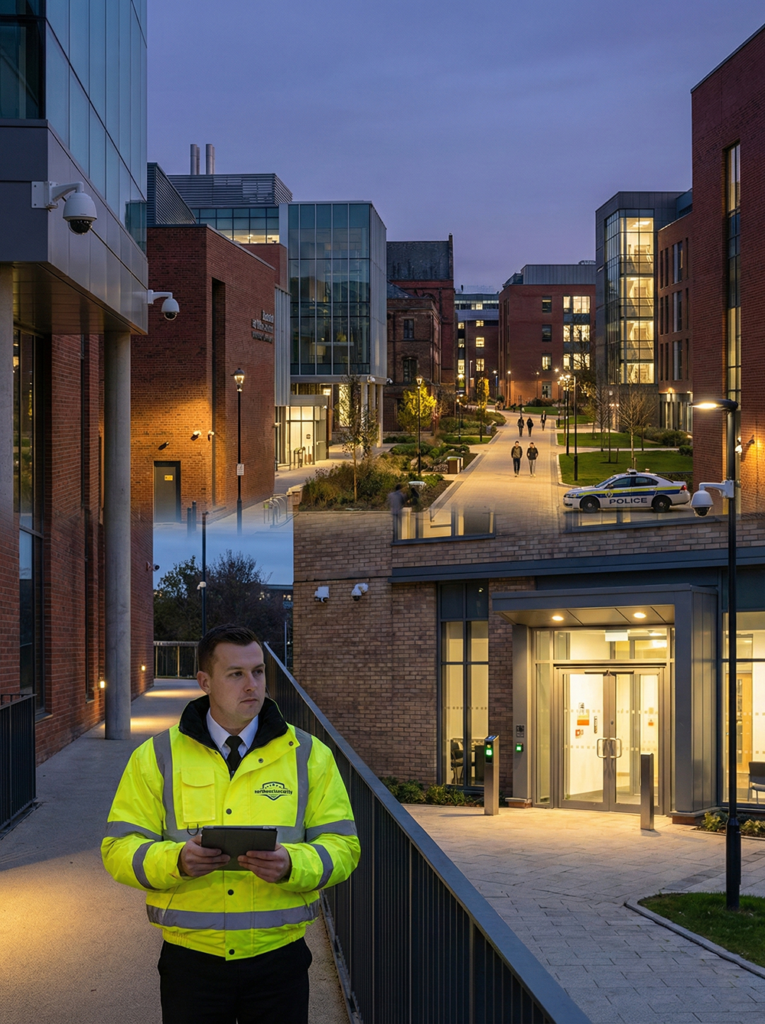
Providing a reassuring presence through uniformed patrols that act as a deterrent to antisocial behavior while offering assistance and directions to the campus community.
Conclusion A secure campus is the foundation of a successful learning environment. When students and faculty feel safe, they can focus entirely on their academic pursuits. By investing in professional